


Neo Deco: Art Deco Elegance for Modern Living
Art Deco has long been admired for its geometry, balance, and sense of glamour. Neo Deco offers a fresh take on this enduring style, refining its richness into something more modern and liveable. In today’s blog, we’ll explore how this evolving aesthetic reinterprets timeless Deco elegance for modern living, and why its blend of structure, symmetry, and understated sophistication is resonating once again.
The return of structured style
There’s a renewed appreciation for interiors that feel more composed and intentional, where structure and detail are given equal weight. Rather than leaning into purely relaxed minimalism, spaces are becoming more defined, with sharper lines, more deliberate layouts, and decorative elements introduced in a controlled way.
Neo Deco builds on this direction while drawing from a much longer design legacy. Art Deco has remained a consistent reference point for decades, admired for its geometry, balance, and refined elegance. This modern interpretation distils that richness for contemporary living, stripping back excess ornamentation in favour of clarity and restraint.
Vintage influence, modern interpretation
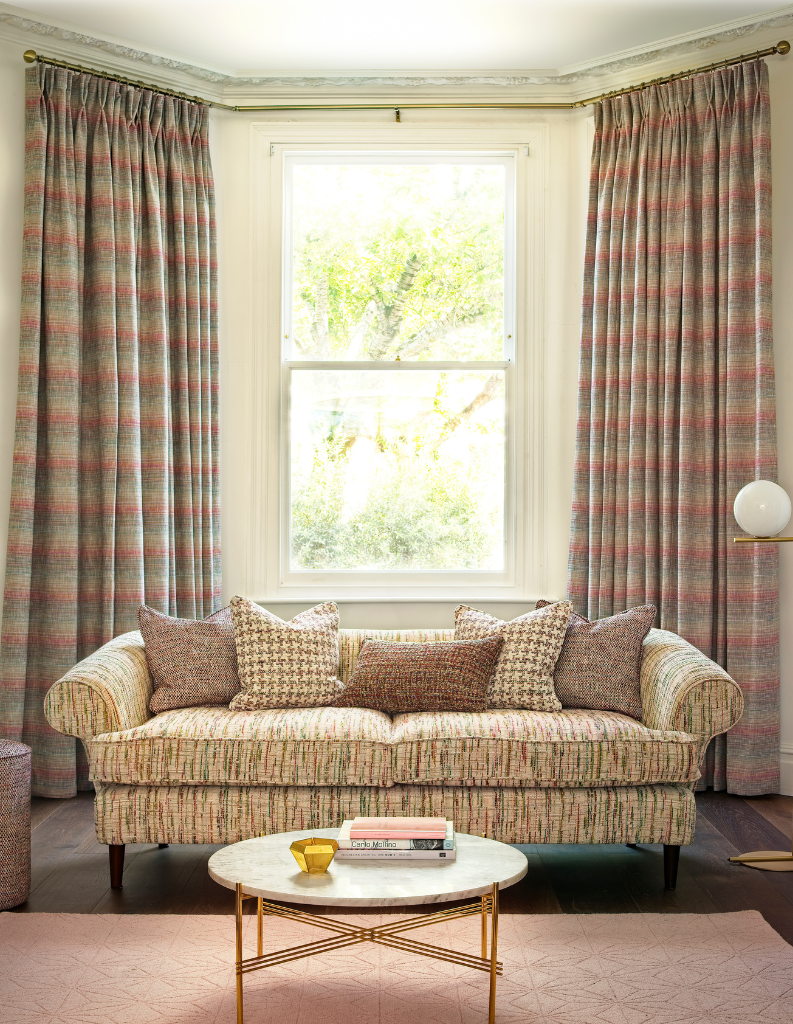
While Neo Deco draws clear inspiration from the past, its execution feels firmly contemporary. The richness associated with traditional Art Deco is reinterpreted in a way that feels lighter and more adaptable to modern living.
Colour plays a key role in this balance. Palettes often combine soft, neutral foundations with deeper, more expressive accents – think muted creams or warm greys set against tones like emerald, navy, or burgundy. This contrast brings depth to a space while keeping it visually calm and cohesive.
This approach extends into materials, which help define the modern character of the style. Alongside traditional Deco finishes such as brass and chrome, there is a greater emphasis on refined contemporary surfaces – smooth lacquers, modern composites, and tactile textiles that introduce softness without losing structure. Together, these choices shift the look away from historical replication and towards something more interpretive.
This evolution is also becoming increasingly visible in how people are exploring the style. On Pinterest, there has been a noticeable rise in searches that reflect Neo Deco’s material-led and expressive direction, from “red marble bathroom” to “antique bar cart”. Rather than literal recreations of the past, these searches point to a growing interest in statement surfaces, sculptural furniture, and curated detail – all filtered through a more selective lens.
A home with a polished presence
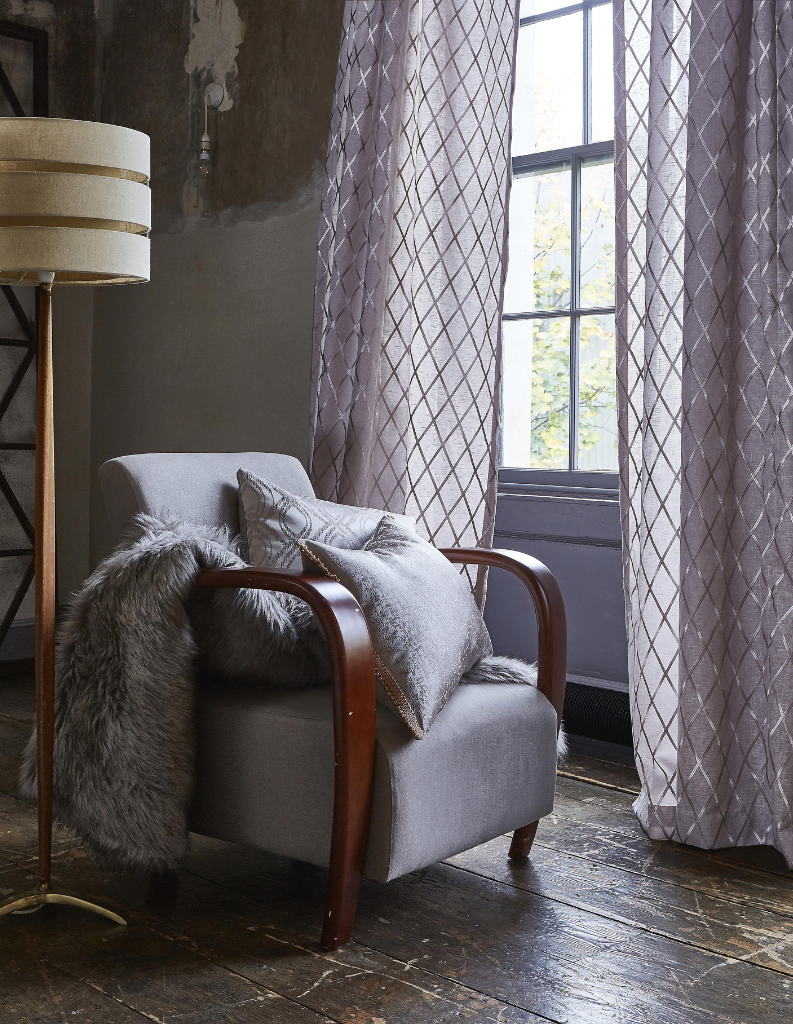
Neo Deco design is less about decoration and more about feeling – a sense of ease that comes from spaces that are thoughtfully composed and quietly assured. It brings a touch of occasion to everyday living, where interiors feel elevated without ever feeling forced.
There’s a subtle echo of Art Deco’s historic elegance here, but it’s reworked in a way that feels lighter, more personal, and easier to live with. The result is a style that feels both composed and expressive, offering just enough structure to ground a space while still leaving room for individuality.
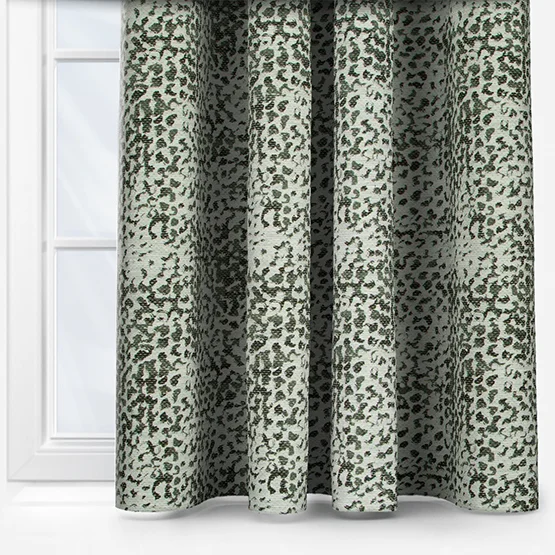
Bringing the Neo Deco trend into your home is easier than ever. At Blinds Direct, you’ll find blinds and curtains in an extensive range of colours, patterns, and luxurious fabrics – making it simple to create a space that feels bold, elegant, and effortlessly sophisticated.
If you’re unsure where to begin, you can order up to eight free samples from the website to start shaping your scheme before committing.
Defining the Neo Deco look
At its core, Neo Deco is defined by visual order, structure, and a considered approach to detail. Pattern and decoration are still very much present, but they are edited with restraint – used to enhance rather than dominate. The style is best understood through its defining visual cues:
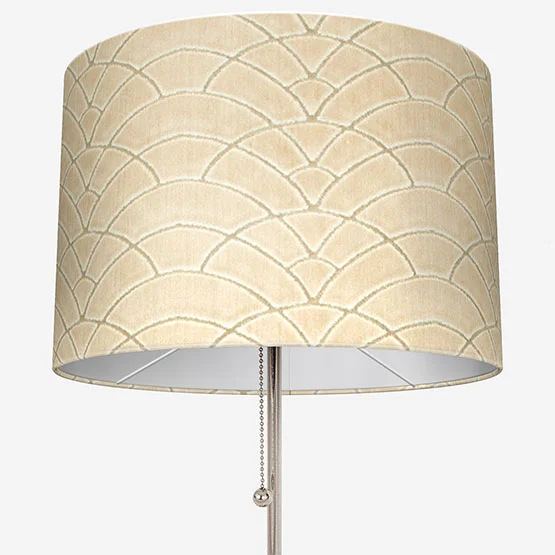
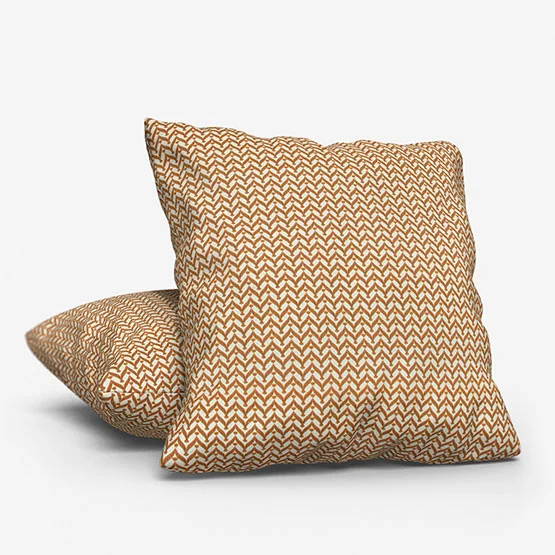
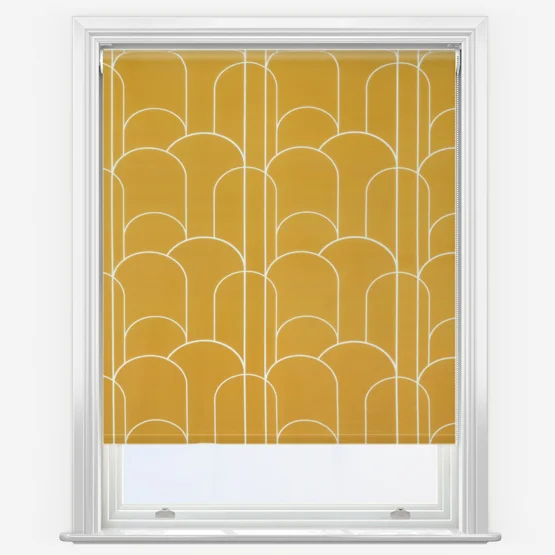
Geometric motifs – Strong, architectural patterns form the foundation of Neo Deco design. Chevron repeats, fan-like detailing, and clean linear forms introduce movement and rhythm, while still maintaining a structured, disciplined feel.
Symmetry and repetition – Balance is central to the aesthetic. Repeating forms and mirrored arrangements create a sense of order, whether in layout, pattern placement, or decorative detailing. This symmetry reinforces the architectural clarity of the space.
Gloss, sheen and polished surfaces – Reflective materials play a key role in bringing depth and light into interiors. Subtle gloss finishes, marbled surfaces, and polished metals such as brass and chrome add quiet luminosity without overwhelming the design.
Structured furniture and styling – Furniture is defined by clean lines and confident silhouettes. Rather than soft or overly organic shapes, pieces are grounded, architectural, and purposeful, reinforcing the overall sense of control and precision.
A touch of luxury – Texture also plays an important supporting role – rich velvets, smooth leathers, and warm wood grains introduce depth and tactility, softening the structured forms while maintaining a sense of refinement within the overall scheme.
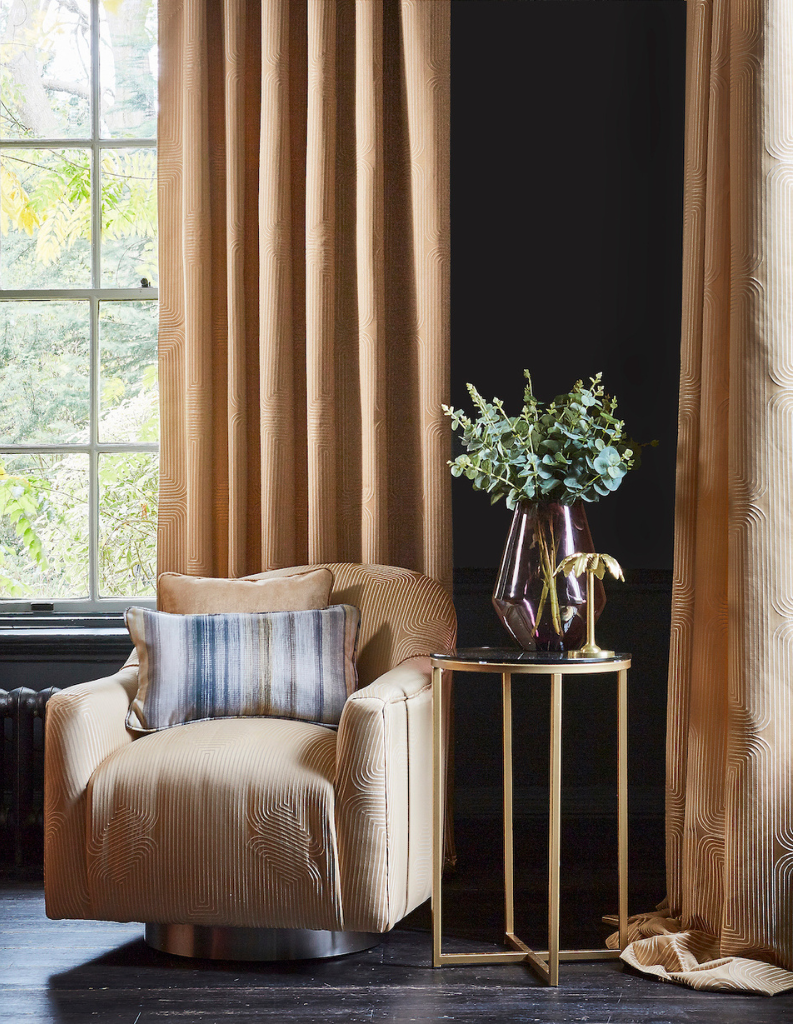
Windows as architectural features
Within Neo Deco interiors, windows are never treated as an afterthought. Instead, they become integral architectural elements – framing light and reinforcing the overall geometry of the space. Because of this, window treatments are designed to feel tailored and intentional, working in quiet harmony with the surrounding architecture.
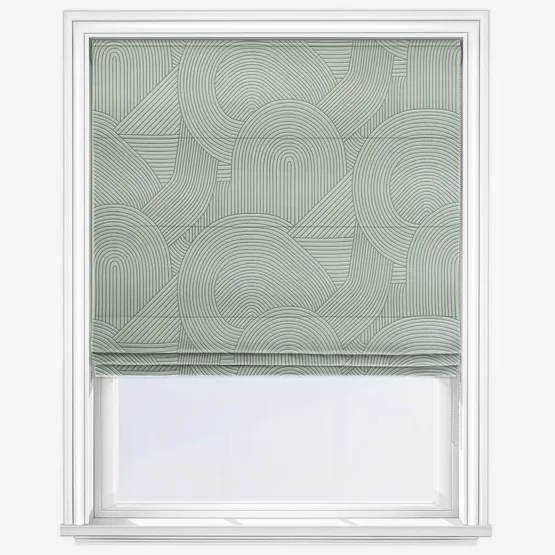
Structured Roman blinds are a natural expression of this approach, offering a clean, fitted finish that mirrors the precision of the overall scheme. Their flat, controlled form enhances symmetry, while allowing subtle pattern or texture to be introduced in an understated way.
Curtains bring a further sense of height and formality, contributing to the vertical architecture of the room. Here, proportion and detail become especially important. Statement holdbacks, crisp pleating, and carefully considered fullness introduce structure and elegance, creating a sense of deliberate framing around the window.
Even the hardware plays a defining role in the overall composition. Metal curtain poles in brass or chrome finishes act as subtle architectural accents, reflecting light and tying into other metallic details throughout the space. Finials and brackets are chosen with the same level of consideration, ensuring every element feels cohesive and resolved.
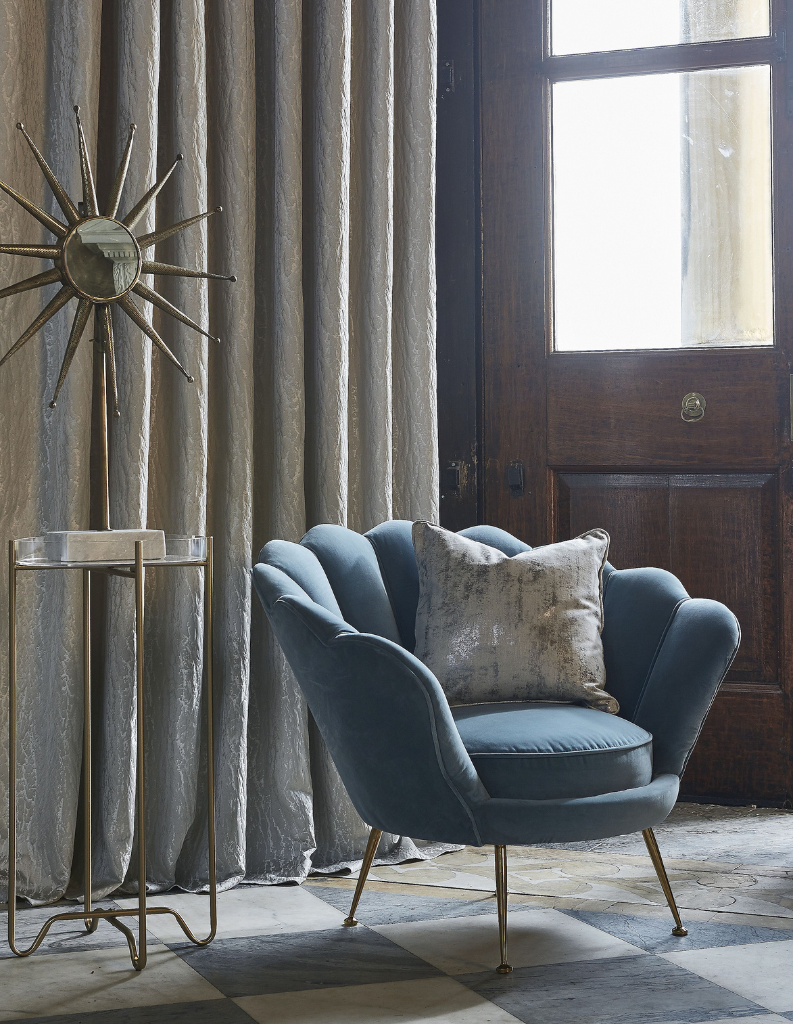
Shop the perfect products for Neo Deco interiors:
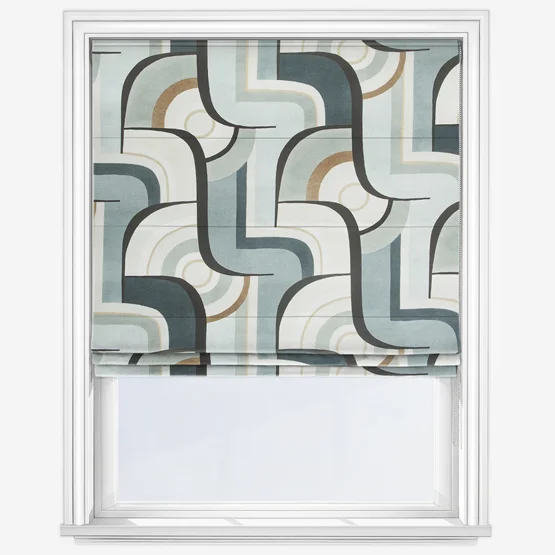

Other posts you may be interested in:
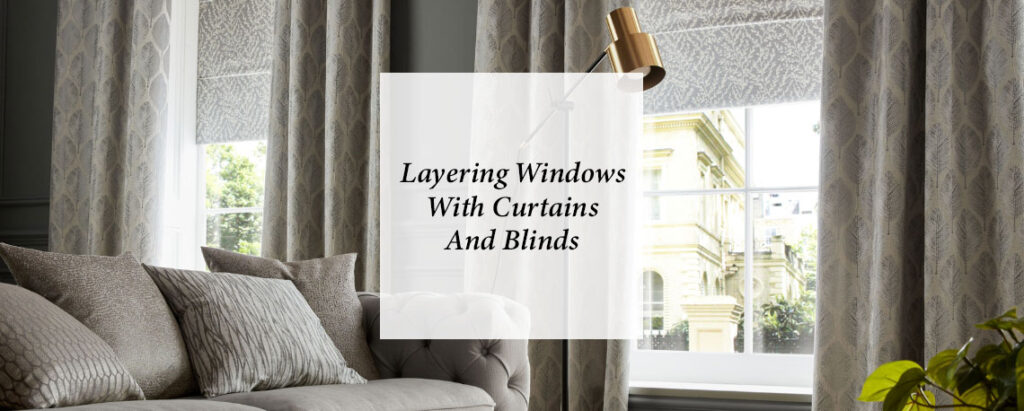
Layering Windows with Curtains and Blinds
Windows are a great place to start when you want to make a room feel cosy. Adding layers with curtains and blinds gives a warm, finished look. In this blog, we’ll share ways to layer your windows and show how to use layering in other parts of your home too. A few layers of furniture, rugs, and cushions can make any room feel welcoming, personal, and full of life.
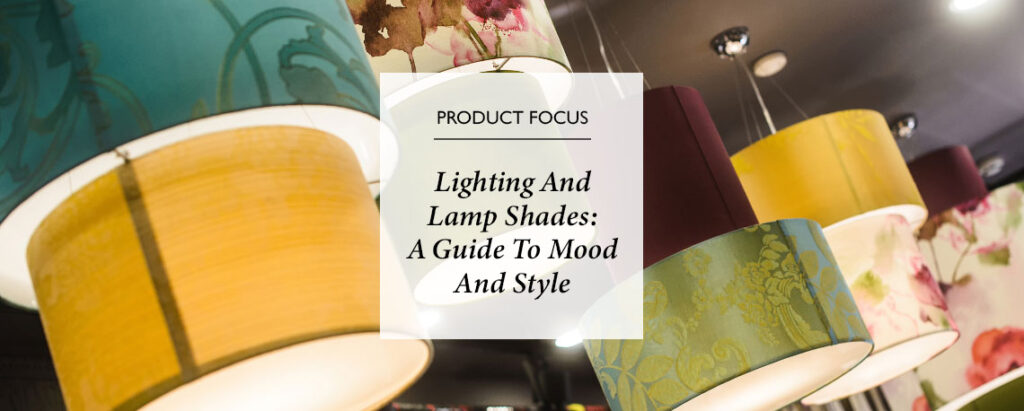
Lighting & Lamp Shades: A Guide to Mood and Style
Whether you want to coordinate your living room lamp shade with a window treatment, or choose a contrasting colour and print for a more unique and charming look, this collection of handmade lamp shades offers plenty of choice. The shades feature a contemporary drum shape that’s perfect for both pendants and table lamps. Read on to find out more…
Browse our buyers guides
Our collection of window furnishings and homeware is defined by quality and craftsmanship. We’re confident we can provide you with the perfect product for your home, no matter your requirements. From moisture proof and stain resistant blinds for bathrooms, to blackout blinds and personalised pieces for kids’ rooms…
